– In der dritten Folge der zweiten Staffel schaut die Dokumentationsreihe hinter die Kulissen der Lieferketten bei Fiat Chrysler Automobiles (FCA). – Logistikmanagement fungiert als Schnittstelle zwischen Produktion und Vertrieb, bei FCA auf globaler Ebene und mit Fokus auf Nachhaltigkeit. – Effiziente Lieferketten generieren Vorteile für Kunden, Fertigung und Umwelt.
Die Dokumentationsreihe „FCA What’s Behind“ schaut hinter die Kulissen von Fiat Chrysler Automobiles (FCA). Die ersten beiden Episoden der zweiten Staffel boten einen umfassenden Überblick über die Philosophie des Unternehmens: das konstante Streben nach Fortschritt, ausgedrückt durch die Forschung nach noch nachhaltigeren Antriebssystemen.
Ziel sind neue Formen der Mobilität, die ihre Wurzeln in der prestigeträchtigen und inspirierenden Geschichte von FCA haben. Das Automobil ist in dieser Philosophie nicht nur ein Transportmittel, sondern die Verkörperung von Ideen, Träumen und Perspektiven, die so zugänglich wie möglich sein müssen. Zur Umsetzung ist die industrielle Produktion erforderlich.
Wesentlich ist aber auch die Logistik, mit der die Kunden erreicht werden. Das hinter Lieferketten und Logistik stehende Management stellt die dritte Folge von „FCA What’s Behind“ in den Mittelpunkt.
Die globale Schnittstelle zwischen Produktion und Vertrieb
Das Logistikmanagement eines Automobilherstellers fungiert als Schnittstelle zwischen der industriellen Produktion und dem Vertrieb beziehungsweise Verkauf. In der Lieferkette werden Materialien und Halbfertigprodukte bewegt, die verschiedenen Produktionsstandorte miteinander verknüpft und die fertigen Fahrzeuge schließlich an die Kunden geliefert. Die Aufgabe des Logistikmanagements besteht darin, den gesamten Prozess präzise wie ein Uhrwerk zu synchronisieren, um unwirtschaftlichen Leerlauf und Verzögerungen zu vermeiden.
Bei FCA umfasst der Aufgabenbereich des Logistikmanagements das gesamte weltweite Lieferantennetzwerk, alle Verteilzentren sowie über 100 Werke auf der ganzen Welt. Alleine diese Struktur ist ein Beispiel für den globalen Charakter des Unternehmens. Um die Nachfrage durch Kunden schnell und effizient zu befriedigen, müssen Materialbewegungen schon vor dem Start der eigentlichen Produktion exakt geplant werden und voll funktionsfähig sein.
Hochkomplexes System
Das Logistikmanagement muss die Produktion in der Balance halten, indem es die Kapazitäten in den Fabriken in ein Gleichgewicht mit der Nachfrage bringt. In der Lieferkette müssen Mengen festgelegt und erforderliche Ressourcen aufgebaut werden, um Materialfluss und -bestand zu optimieren. Dabei entsteht ein äußerst komplexes und organisches System, dessen Komponenten alle auf ein gemeinsames Ziel hinarbeiten: die nach Kundenwunsch konfigurierten Fahrzeuge termingerecht zu produzieren.
Nur so können Aufträge von jedem FCA Handelspartner weltweit schnell und effizient erfüllt werden. Das Management von Lieferketten und Logistik kommt nämlich schon gleich nach der Bestellung ins Spiel. Materialeinsatz, Produktion und Kapazitäten in den einzelnen Werken müssen aufeinander abgestimmt werden.
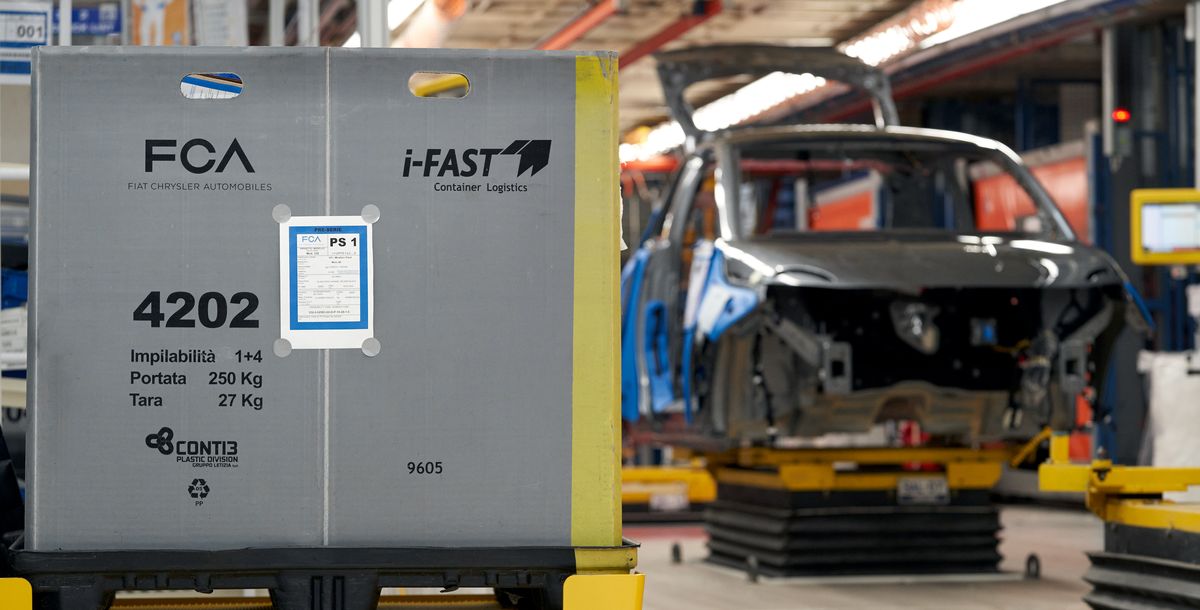
Basierend auf dem erstellten Zeitplan organisiert I-Fast Container Logistics, eine hundertprozentige Tochtergesellschaft von FCA, den Transport einzelner Komponenten von den Lieferanten zu den Werken von FCA, wo sie verarbeitet und montiert werden. Sobald das Auto produziert ist, übernimmt ein anderes Tochterunternehmen von FCA den Transport an die Händler weltweit: I-Fast Automotive Logistics.
Für die Überstellung vom Auslieferungslager zum Hafen werden auch hochmoderne, mit Erdgas betriebene Autotransporter eingesetzt, die für die nachhaltige Revolution im Güterverkehr stehen. Rund 60 Prozent der in den FCA Werken ein- und ausgehenden Transporte erfolgen umweltschonend auf dem See- oder Schienenweg.
Umweltschonende Transportwege
Auch durch organisatorische Innovationen steigert FCA die Nachhaltigkeit. So führte die optimierte Beladung von Containern zu einer Einsparung von rund 600 Tonnen CO2 alleine im Jahr 2019. Durch weitere Maßnahmen zur Optimierung des Materialtransports werden pro Jahr über 1.500 Tonnen CO2 eingespart.
Und schließlich konnten durch die Rationalisierung des Fahrzeugtransports auf Straße, See und Schiene die CO2-Emissionen um weitere 2.700 Tonnen reduziert werden. Das Management von Logistik und Lieferketten arbeitet bei FCA auf innovative, flexible und nachhaltige Weise, um jeden Kundenwunsch zu erfüllen sowie Vorteile für Produktion und Umwelt zu erzielen.